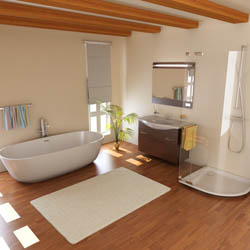
 Rose veneer is a veneer obtained from the Bubinga tree and is a very hard wood type. Due to its resemblance to rosewood, it is often called rosewood in our country. trade name; Bubinga is Kevazi wood veneer. In English, it is called African Rosewood.
FEATURES OF ROSE COATING (BUBINGA):
Although its wood is hard and dense, its timber can be easily cut and processed. The cutting angle is recommended as 18° and the cutting speed as 24-26 m/s. Rose veneer accepts paint and varnish well into its surface. The thickness of bubinga coatings produced for decorative purposes should not be less than 0.7 millimeters. In decorative products below this thickness, resin channels may create difficulties during coating. Its heartwood is resistant to fungi and termites. It should be dried slowly. It has a structure prone to warping and cracking.
It grows up to 30 meters in length. Usable stem length reaches 9-18 meters and a diameter of 80-160 centimeters. They have very cylindrical and smooth bodies. The root protrusion is small, but still quite prominent. Sapwood 5-7 centimeters wide, whitish; The heartwood is medium reddish, brown, or pinkish-brown with darker vein lines.
Recommended article, carpet flooring types click here to get detailed information about it.
Pressure resistance: 675-700 kp /cm2,
Flexural strength: 1350-14.20 kp /cm2,
Modulus of elasticity: 154000 kp / cm2.
ROSE COATING (BUBINGA) GROWING AREAS/ORIGIN:
Bubinga grows only in Central and West Africa in the world, especially in Gobon, Cameroon, Ivory Coast.
ROSE COATING (BUBINGA) USAGE AREAS:
The timber of the Bubinga tree; It is a suitable material for parquet, furniture, ornaments, decorative coating, cabinet making, inlay, shipbuilding, the manufacture of musical instruments and turnery. It is also seen that it is used in making knives and brush handles. At the same time, the resin of the Bubinga tree is one of the main raw materials for varnish production.
 Flooring Systems